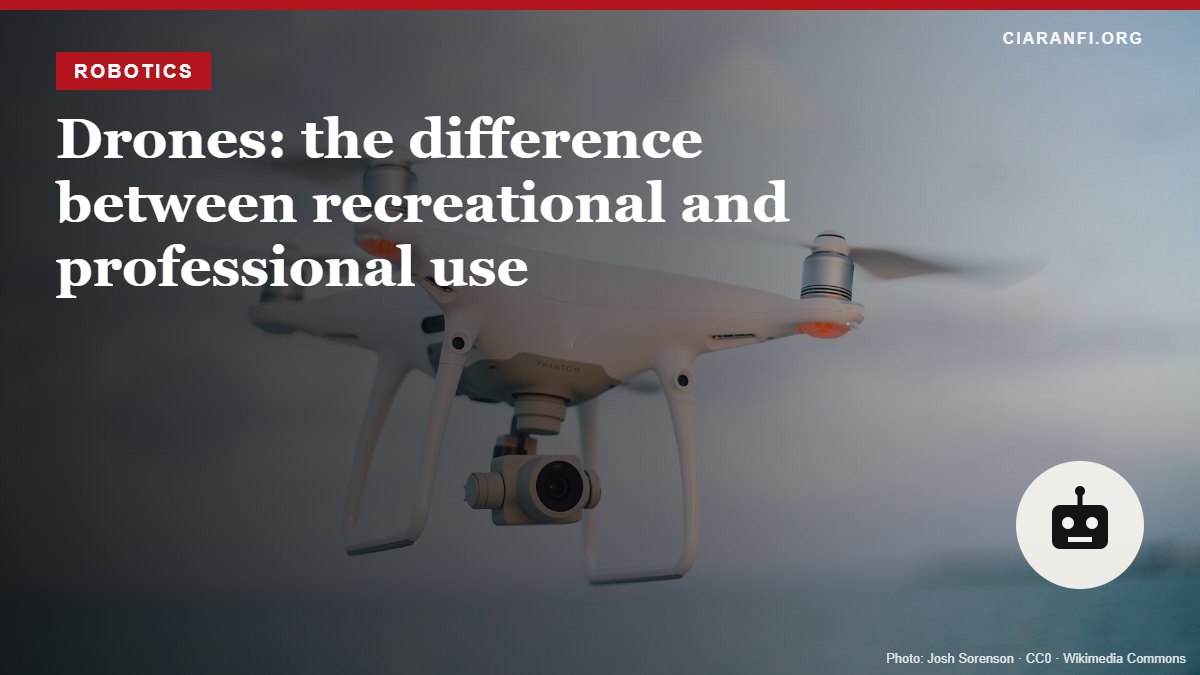
A drone is an aircraft with no pilot on board, flown remotely or by a flight programme. The category covers very different things: from a tiny toy weighing a few grams to professional machines for surveying, inspections and filming. The rules that apply vary a lot with the weight of the drone, where you fly and why. Before taking off, it’s worth working out which case is yours.
Recreational and professional use
In the European Union, drones are governed by common EU regulations, applied in each country by the national aviation authority (in Italy, ENAC), which classify them by risk category. A recreational flight, with no commercial purpose, follows different rules from a professional one, such as filming for a client or an industrial inspection. The rules also change with the drone’s weight and its distance from people. Always check the current rules on your national authority’s website, because they are updated over time. Outside the EU, local rules apply.
Where flying is banned or restricted
Flying is restricted or banned in some areas: near airports, over military zones, over sensitive sites such as prisons and critical infrastructure, and often over built-up areas. There are also protected areas, such as parks and nature reserves, where you need permission to fly. Before flying, use the official maps and apps that show restricted zones, and check for NOTAMs, the notices issued to aircraft.
Flight safety
- Don’t fly over people, crowds, events or building sites.
- Always keep the drone in sight, without relying only on the screen or on-board cameras.
- Check the weather: strong wind, rain and fog compromise the flight.
- Check the battery and the spare before take-off, and respect the flight-time limits.
Privacy and filming
A drone with a camera can film people and private places. Filming someone without consent, especially in private settings or intimate situations, is a privacy violation and can have criminal consequences. Professional filming requires attention to data protection rules and, when recognisable people are involved, often their consent as well.
Registration and training
Depending on weight, many drones require registration with the competent authority and an operator ID displayed on the aircraft. Professional work requires specific training and, in some cases, an authorisation. Check your situation before you start, because flying without the required credentials can lead to fines.
An informed choice
Choose a drone based on how you’ll really use it: a light model is enough for fun or occasional footage, while professional work needs sturdier equipment and proper training. Either way, the most important rule is the same: fly only where it’s allowed, respecting people and their privacy.